
The Longer Ending of Mark: Confidence in God’s Word
Intent of the Teaching Session
Pastor Jason Huff’s intent in this November 2, 2025 teaching helps to clarify the textual authenticity and theological implications of Mark 16:9–20.
He aimed to help the congregation think clearly about why most scholars believe these verses were likely not part of Mark’s original gospel while reaffirming the reliability and divine preservation of Scripture.
His goals were threefold:
Explain the field of textual criticism and show it strengthens, not weakens, confidence in God’s Word.
Present balanced evidence for and against the longer ending’s originality.
Assure believers that, regardless of the variant, the Bible is trustworthy, inspired, and enduring.
Pastor Jason’s Three Main Discussion Points
1.“Why do the overwhelming majority of biblical scholars believe that Mark 16:9-20 were likely not part of the original text?” Pastor explained both external evidence (the oldest manuscripts—Codex Sinaiticus and Vaticanus—end at v. 8; early church fathers like Eusebius and Jerome confirm this) and internal evidence (the vocabulary and style differ from the rest of Mark; e.g., the title “Lord Jesus” never appears elsewhere in Mark).
2.“If those verses are not original, where did they come from, and why are they still in our Bibles today?” Pastor said the longer ending was probably added in the 2nd century by someone compiling genuine material from Matthew, Luke, and John to give a more complete conclusion. It was not heretical, so the Church kept it. Later manuscripts (especially those behind the KJV) included it, and modern Bibles retain it for transparency and continuity.
3.“If those verses aren’t original, can we still trust the Bible?” His answer: Absolutely yes. Pastor used this to affirm the reliability and divine preservation of Scripture, noting there are over 20,000 manuscripts of the New Testament—making it the most thoroughly attested document in history. The existence of documented variants actually increases our confidence that God’s Word has been preserved faithfully (Isa 40:8).
All Scripture References
Mark 16:1-8
Mark 16:9-20
Mark 1:1
Mark 1:11
Mark 1:40-45
Mark 4:35-41
Mark 6:34-44
Mark 8:31-33
Mark 9:2-8
Mark 10:45
Mark 14:32-42
Mark 15:39
Matthew 28:18-20
Luke 24:9-12
John 20:11-18
Acts 2:14-36
Romans 12:1-2
Isaiah 40:8
7 Key Points about Mark 16:9-20
Earliest Manuscripts End at Verse 8 — Codex Sinaiticus and Vaticanus conclude at 16:8, supporting the shorter ending.
External Witnesses Support Omission — Early fathers (Eusebius, Jerome) testify that nearly all Greek copies they saw stopped at 16:8.
Internal Style Differences — Unique vocabulary and syntax, such as “Lord Jesus,” distinguish 16:9-20 from Mark’s usual language.
Likely Added in Early 2nd Century — The longer ending appears to compile legitimate post-resurrection details from other Gospels.
Not Doctrinally Erroneous — Though probably not penned by Mark, it aligns with biblical truth and early Christian teaching.
Inclusion for Transparency — Because most later manuscripts contained it, translators kept the passage with explanatory brackets.
Confidence in Scripture’s Integrity — Textual criticism shows rigorous preservation; God’s Word remains trustworthy and enduring (Isa 40:8).
Pastor’s Summary
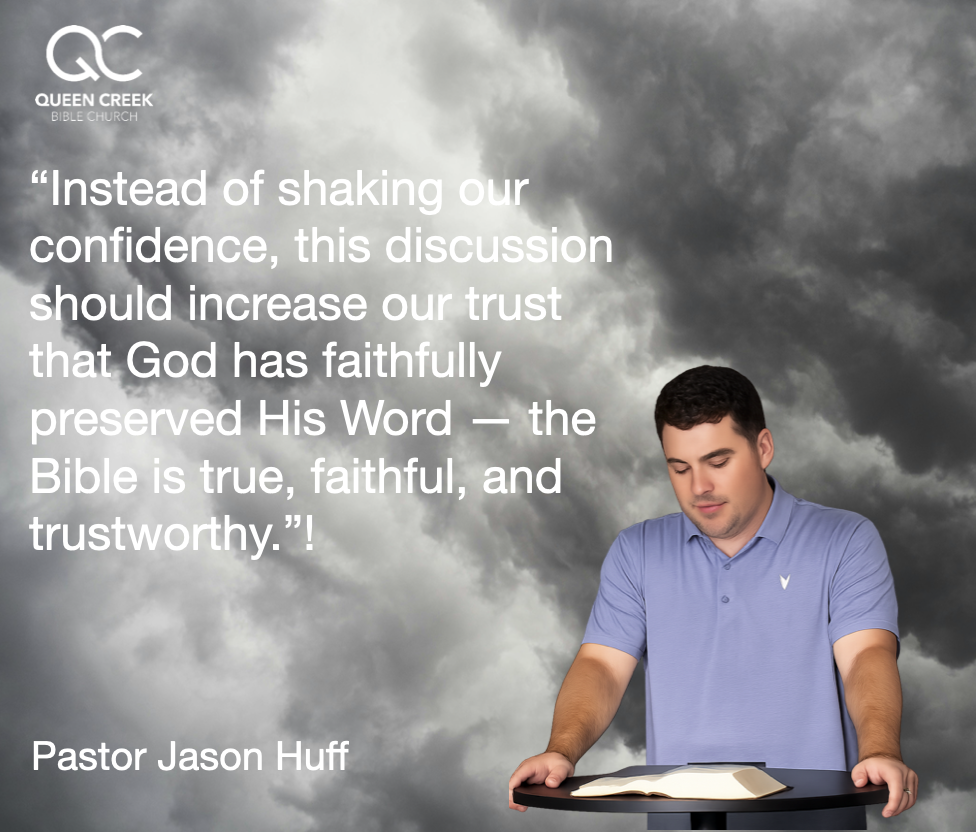
Pastor Jason closed by urging believers not to fear textual study but to celebrate how God has faithfully preserved His Word. He emphasized that textual criticism strengthens faith by confirming Scripture’s accuracy. The Bible is “the most rigorously attested document in human history,” he said, and believers can open it with full confidence that it is faithful, true, and trustworthy. As the church begins its next book study (Jonah), he reminded everyone that “this book is God’s Word—living, enduring, and completely reliable.”
Pastor’s Final Prayer
Father, you know my heart better than I know my own heart. I’m excited to open a new book next week, but my heart has been encouraged and stirred as we’ve seen how you have preserved your Word. Thank you for showing us that we can trust the Scriptures because you are faithful. We praise you that Jesus is God in the flesh—the Son of God, the Servant, and our Savior. Help us to be men and women of faithfulness, obedience, and trust. When we sin, restore us, and help us to live as living sacrifices, holy and acceptable to you, our reasonable act of worship. In Jesus’ name, amen.